Transportation has long been considered a standard operating expense for many Nigerian businesses. Fuel budgets are quite inconsistent, maintenance plans are interfering with productivity, and fleet expenses are subtly reducing profit margins.
But something fundamental is changing.
Electric vehicles (EVs) are transforming mobility from a recurring cost into a strategic business decision, and the shift is being driven as much by economics as by policy.
A Policy Environment Built for Early Movers
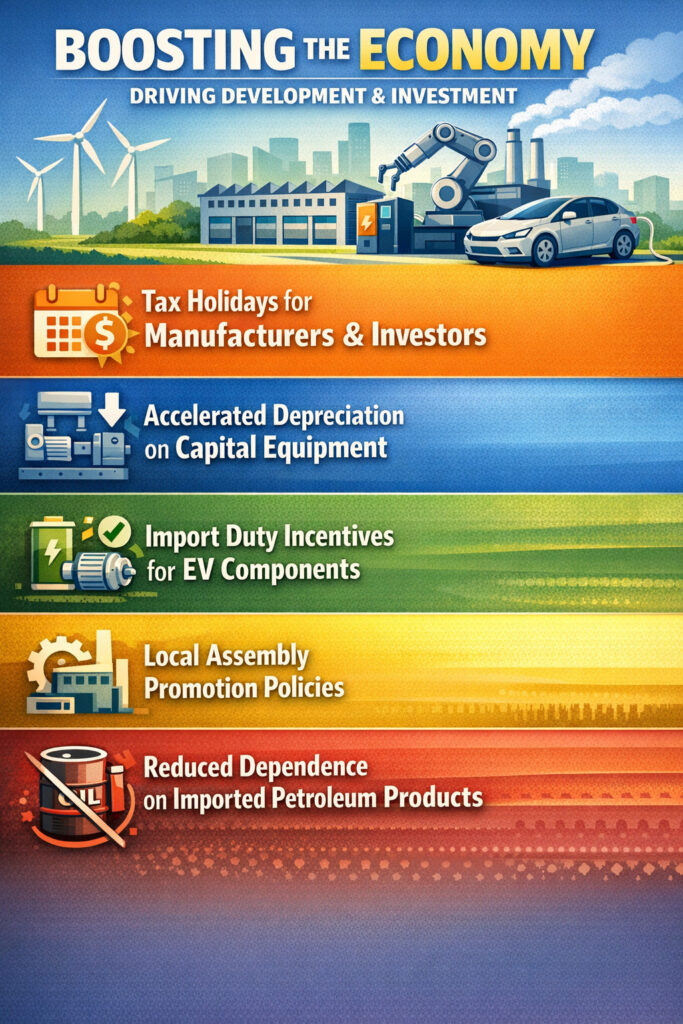
Nigeria’s automotive evolution is now guided by the National Automotive Industry Development Plan (NAIDP 2023), a framework clearly signaling government support for electric mobility and local automotive growth.
The incentives are deliberate and business-focused:
- Tax holidays for manufacturers and investors
- Accelerated depreciation allowances for capital equipment
- Import duty incentives for EV components
- Local assembly promotion policies
- Reduced dependence on imported petroleum products
For companies, this creates a rare alignment between government policy and corporate efficiency. Businesses adopting electric mobility can reduce tax exposure, shorten capital recovery timelines, and position assets within an industry receiving long-term national backing.
In strategic terms, adoption risk is decreasing while financial upside is increasing.
The Economics: Total Cost of Ownership Wins
The real conversation around EVs is not purchase price, it is the total cost of ownership.
Fuel remains one of the most volatile operating expenses in Nigeria. Electrification replaces fuel uncertainty with predictable energy costs, allowing companies to stabilize operating budgets.
Maintenance economics further strengthen the case. Electric vehicles operate with significantly fewer moving parts, eliminating engine oil servicing and reducing mechanical wear. The result is fewer breakdowns, lower maintenance spend, and improved fleet uptime.
Higher uptime directly translates to better asset efficiency. Vehicles spend more time delivering value and less time in repair bays.
ESG, Carbon Finance, and Competitive Positioning
Corporate decision-making is increasingly influenced by Environmental, Social, and Governance (ESG) performance. Electric fleets strengthen sustainability reporting while preparing companies for emerging opportunities in carbon finance and carbon credit ecosystems.

Beyond compliance, EV adoption signals innovation leadership. Companies that electrify early position themselves as forward-looking organizations aligned with global energy and sustainability transitions, an advantage that increasingly matters to investors, partners, and customers alike.
From Strategy to Reality: A Nigerian Case Study
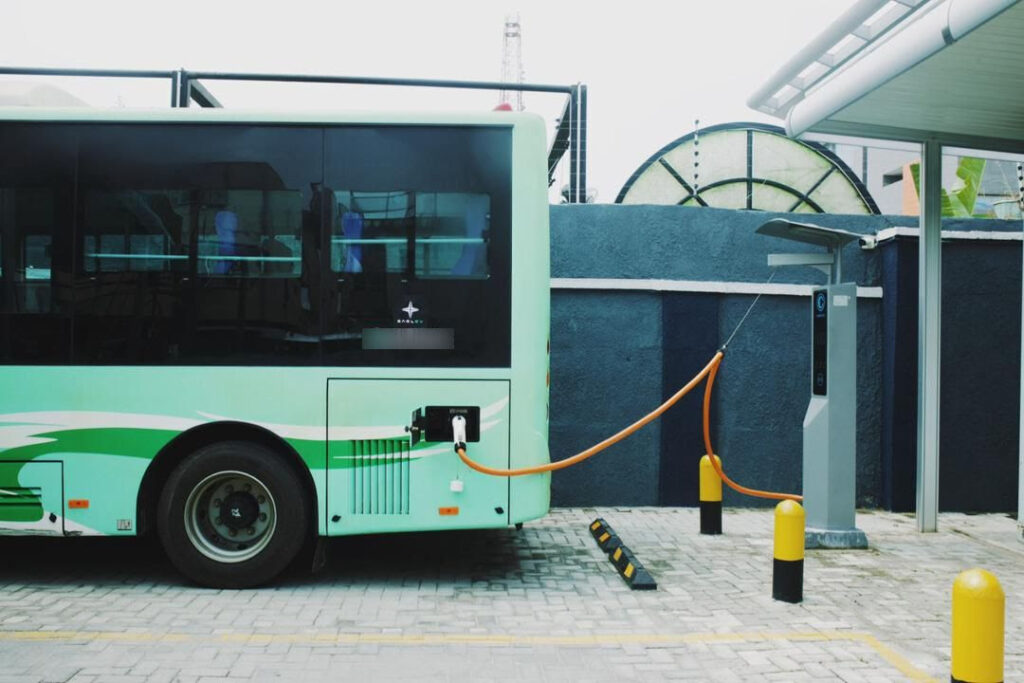
SAGLEV recently delivered an 18-passenger fully electric E Star V9 EV, manufactured by Dongfeng, to Stanbic IBTC at its headquarters in Victoria Island, Lagos. Deployed as a staff bus, the vehicle supports daily employee transportation while reducing operational emissions and dependence on fossil fuels.
The delivery builds on Stanbic IBTC’s earlier acquisition of the SAGLEV Sky 01 EV in 2025, demonstrating that electric mobility is not a pilot concept but a scalable corporate solution.
Our Value Proposition
Successful electrification goes beyond vehicle procurement. It requires infrastructure planning, charging strategy, lifecycle support, and operational guidance. SAGLEV doesn’t just sell the vehicles; we become your partners.
The Strategic Bottom Line
Electric vehicles are no longer simply about sustainability. Within Nigeria’s evolving policy and economic landscape, they represent smarter cost management, stronger asset performance, and future-ready corporate positioning.
For Nigerian businesses, the question is no longer whether electric mobility is viable. The question is which organisations will move early enough to capture the operational, financial and reputational advantages that the transition offers.